

Face oils have been part of skincare rituals for centuries, and the ones we swear by at Jurlique HQ are no exception. A few drops of a high-performing oil can hydrate, smooth, and soften skin, help it feel more resilient, and leave you with a natural, lit-from-within glow. But they're also one of the most misunderstood products in skincare, often assumed to be heavy, pore-clogging, or only suited to dry skin.
So what do face oils actually do, and are they good for the skin? Here's what to look for, who they're for, and how to bring one into your ritual for the most radiant results.
What Are Face Oils?
Face oils are concentrated skincare formulas built from botanical extracts, vitamins, and minerals. They come in two main forms: single oils that focus on one concern, and blends that combine several farm-grown ingredients to treat multiple concerns at once. All face oils rely on a carrier oil as their base. Safflower Oil, for example, is the carrier used across Jurlique's face oil range, gently carrying the active ingredients onto the skin and helping them absorb rather than evaporate away.
What Are Face Oils Used For?
Face oils are traditionally the final step in a skincare ritual. Rather than replacing your moisturiser, a well-formulated oil works alongside it, sealing in the hydration and active ingredients from the products applied beforehand while adding its own nourishing benefits on top. It's the step that helps a ritual hold together: everything from your essence to your serum tends to perform better, and last longer, once an oil has sealed it all in.
Are Face Oils Good for the Skin? Busting the Biggest Myth
The most common misconception about face oils is that they're only for dry skin, and that oily or acne-prone skin should steer clear altogether. In reality, skin produces its own natural oil (sebum), and when that balance is disrupted, whether by over-cleansing, harsh actives, or environmental stress, the skin barrier can become compromised, sometimes leading to more oil, not less. A lightweight, non-comedogenic face oil can actually help restore that balance rather than disrupt it, making oils a genuine option for oily and combination skin too, not just dry or mature complexions.
Do Face Oils Work? Face Oil Benefits
1. Lasting Hydration. Oils help slow trans-epidermal water loss (the gradual process by which moisture escapes through the skin's surface), keeping skin plump and comfortable for longer.
2. Nourishment From Botanical Extracts. Many face oils are rich in vitamins, antioxidants, and plant actives that support the skin's moisture barrier over time. Chia Seed, for example, has been shown in one clinical study to help reinforce the moisture barrier after 28 days of daily use¹.
3. Support for Tired, Ageing Skin. Blends built around adaptogenic herbs and antioxidant-rich botanicals are often used to help skin look fresher, brighter, and more even in tone, especially for complexions that feel dull or fatigued.
4. Visible Firming for Mature Skin. Ingredients like Rock Samphire extract, nicknamed the "Retinol of the sea," are prized for their ability to help firm skin and soften the appearance of lines and wrinkles, making them a popular addition to facial oils formulated for mature skin.
5. Balance for Oily and Combination Skin. Lightweight, fast-absorbing oils can help regulate the skin's own oil production, offering hydration without the heavy or greasy feeling often associated with richer formulas.
6. A Healthy, Natural Radiance. Because oils reflect light differently to water-based products, they leave skin looking dewy and luminous, often the finishing touch that makes a ritual feel complete.
How to Choose a Face Oil for Your Skin
Not all oils are created equal. Look for natural, high-quality plant-based oils that nourish the skin without clogging pores, and steer clear of synthetic or mineral oils, which tend to be comedogenic (a common cause of blackheads and congestion).
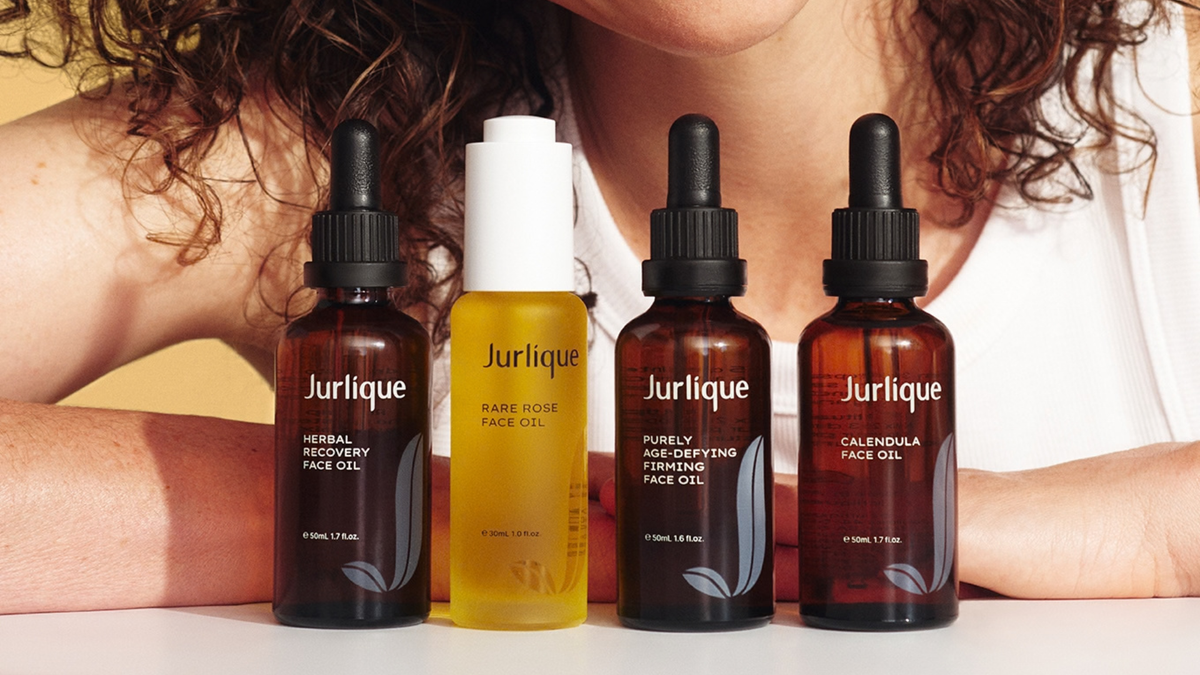
- Sensitive skin: Calendula Face Oil, for its soothing, farm-grown Calendula and Manuka Leaf blend
- Dull, tired, or early signs of ageing: Herbal Recovery Face Oil, clinically proven to unify the complexion and improve brightness², while also revealing a fresher, clearer complexion³. In consumer trials, 91% described the texture as lightweight and fast-absorbing⁴
- Mature skin: Purely Age-Defying Firming Face Oil, clinically proven to improve skin moisture by 34%⁵, smoothness by 26%⁶, and firmness by 18%⁷ over 28 days, while helping to reduce the visible appearance of wrinkles⁸. It's also been tested on skin prone to burning, stinging, redness, and dryness, making it a considered option for more reactive skin too⁹
- Dehydrated skin can often present as oily or breakout-prone, as skin overcompensates for lost moisture. Lightweight, fast-absorbing oils deliver hydration without the heavy or greasy feeling often associated with richer formulas.
How to Layer a Face Oil Into Your Ritual
1. Prep the skin. Cleanse with a gentle formula from our cleansers collection to remove impurities without stripping moisture.
2. Hydrate first. Follow with the Activating Water Essence+, which softens the skin and delivers continuous hydration, helping the active ingredients that follow absorb more effectively.
3. Treat. Apply your serum or targeted treatment.
4. Moisturise, if needed. Depending on your skin type and the season, layer a moisturiser over or under your oil.
5. Seal with oil. Warm two to three drops of your face oil between your palms and press gently into the skin. This helps it absorb evenly and brings out its natural glow.
Face oils can be used morning and night. If you're applying in the morning, give the oil a moment to settle before makeup or SPF.
Explore Jurlique's face oil range to find the formula that suits your skin, browse our full face care collection, or get in touch for personalised advice.
FAQs
When should you use face oils?
As the final step in your ritual, after cleansing, essence, and serum, to lock in hydration and everything applied beforehand.
Is it okay to use face oil every day?
Yes. Used daily, a lightweight facial oil helps maintain balance and hydration, and most formulas absorb quickly with no greasy residue.
Are face oils actually good for your skin?
Yes. A well-formulated oil can nourish, hydrate, and support the skin barrier across most skin types, including oily and combination skin, when the right formula is chosen.
What oils should you avoid on your face?
Heavier, synthetic, or mineral oils can be comedogenic and lead to congestion or shine. Opt for lightweight, naturally derived, non-comedogenic formulas instead.
Should I apply face oil in the morning or at night?
Either works. Many prefer evenings to avoid interference with makeup or SPF, though morning application is fine if you allow the oil to settle first.
¹ Clinical study of 15 subjects using an emulsion with Chia Seed oil daily for 28 days.
² Based on a clinical evaluation of the complexion of 30 subjects using the product twice daily for 56 days.
³ Based on a clinical evaluation of the complexion of 33 subjects using the product twice daily for 28 days.
⁴ Based on a self-assessment questionnaire of 55 subjects, 30 minutes after a single application.
⁵ Based on corneometry measurements on 30 subjects using Purely Age-Defying Face Oil for 28 days.
⁶ Based on the smoothness parameter using image analysis on 30 subjects using Purely Age-Defying Face Oil for 28 days.
⁷ Based on cutometry measurements on 30 subjects using Purely Age-Defying Face Oil for 28 days.
⁸ Based on the volume of nasolabial folds on 30 subjects using Purely Age-Defying Face Oil for 28 days.
⁹ Based on a study on 30 subjects with skin prone to burning, stinging, redness, and dryness using Purely Age-Defying Face Oil for 28 days.


